Background
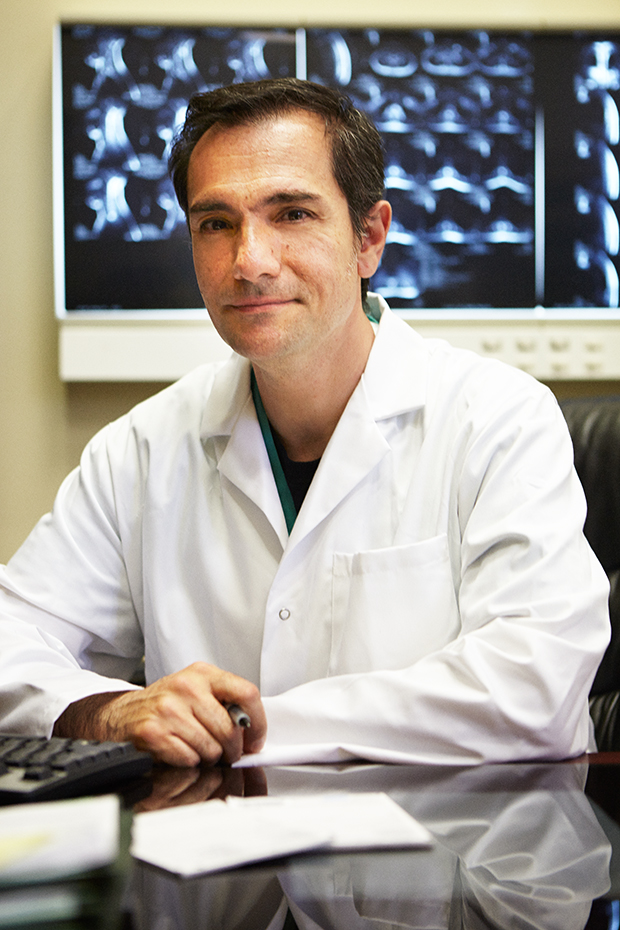
Dr. Merola focuses on personal care with unhurried appointments, prompt access, direct physician communication, and hands-on coordination across every step of treatment. He does not rely on physician extenders. Every patient meets with Dr. Merola directly, in person.
Castle Connolly recognized Dr. Merola as a 2026 Top Doctor, a distinction the organization says is based on peer nomination and vetting. Castle Connolly's 2026 recognition notice places its Top Doctors among seven percent of U.S. physicians.
From conservative therapies to complex spinal reconstruction, Dr. Merola's expertise spans the full spectrum of spine health, including scoliosis, spinal deformity, degenerative conditions, and minimally invasive surgical techniques.
Clinically, Dr. Merola has served as an attending orthopaedic surgeon at NewYork-Presbyterian / Lower Manhattan Hospital, NewYork-Presbyterian Brooklyn Methodist Hospital, Mount Sinai Hospital, and SUNY Downstate Medical Center. He is widely recognized for his operative and nonoperative management of complex spinal deformity, scoliosis, and reconstructive spine surgery.
His academic career includes appointments as Assistant and Associate Professor of Orthopaedic Surgery at SUNY Downstate Medical Center, Clinical Assistant Professor at New York Medical College, and Adjunct Clinical Assistant Professor of Orthopaedic Surgery at Weill Cornell Medical College. In each role he mentors residents and medical students, emphasizing the integration of research, technical mastery, and compassionate care.
Areas of expertise
Dr. Merola has more than 30 years of clinical practice treating the full range of spinal conditions, with over 20,000 patients treated through operative and non-operative care.
Cervical and lumbar reconstruction
Disc arthroplasty, hybrid constructs, and multi-level fusion for degenerative disease, deformity, and instability of the cervical or lumbar spine.
Navigation-guided minimally invasive surgery
Microscope-assisted decompression, tubular access surgery, and percutaneous fixation used when they fit the diagnosis, anatomy, and operative plan.
Deformity and scoliosis correction
Individualized evaluation of spinal alignment, balance, neurologic findings, bone health, and prior treatment before a reconstructive plan is considered.
Non-operative optimization
Structured physical therapy, interventional pain management, and bone health management to delay or eliminate the need for surgery.
Credentials and recognition
Board certification and fellowships
- Board Certified, American Board of Orthopaedic Surgery
- Fellow, American Academy of Orthopaedic Surgeons
- Fellow, Scoliosis Research Society
Hospital appointments
- Attending Spine Surgeon, Weill Cornell
- Attending Spine Surgeon, NewYork-Presbyterian Brooklyn Methodist Hospital
- Former Attending, NewYork-Presbyterian / Lower Manhattan Hospital
- Former Attending, Mount Sinai Hospital and SUNY Downstate Medical Center
Academic appointments
- Adjunct Clinical Assistant Professor of Orthopaedic Surgery, Weill Cornell Medical College
- Clinical Assistant Professor, New York Medical College
- Assistant and Associate Professor of Orthopaedic Surgery, SUNY Downstate Medical Center
Awards and distinctions
- 2026 Castle Connolly Top Doctor
- New York Magazine Top Doctors
- Super Doctors
- Russell A. Hibbs Award, Scoliosis Research Society
Research and academic contributions
Textbook co-editor
Surgical Techniques for the Spine (Thieme, 2003). Co-editor, with Thomas R. Haher, MD. 59 chapters, 86 contributing experts.
Selected publications
- Multicenter study of adolescent idiopathic scoliosis surgical outcomes (SRS instrument). Spine, 2002. PubMed
- Selective versus nonselective fusion in Lenke 1B and 1C curves. Spine, 2003. PubMed
- Multisurgeon assessment of surgical decision-making in adolescent idiopathic scoliosis. Spine, 2001. PubMed
- Anatomic considerations for cervical lateral mass screw placement. The Spine Journal, 2002. PubMed
- Occipital morphology and occipital screw pullout strength. Spine, 1999. PubMed
- Occipital morphology and occipital screw pullout strength (early findings). Spine, 1996. PubMed
- CT evaluation of the normal adult odontoid for internal fixation. Spine, 1995. PubMed
- HIV-positive status and inpatient complications after spine surgery. Journal of Clinical Medicine, 2023. PubMed
Philosophy of care
Conservative care comes first. Surgery is reserved for clear indications with defined outcomes and a plan for what happens next. That discipline protects a patient's function, and for someone whose livelihood depends on their body, it protects their income too.
Thorough diagnosis
Imaging, electrodiagnostics, and biomechanical analysis are read directly by Dr. Merola before any treatment discussion begins.
Measured intervention
Non-operative measures are prioritized. Surgery is reserved for clear indications with defined outcomes and contingency plans.
Long-term oversight
Structured follow-up visits, imaging review, and direct communication keep recovery on course well beyond the operative window.
Offices and languages
Manhattan
141 West 28th Street, 5th Floor
New York, NY 10001
Brooklyn
567 1st Street
Brooklyn, NY 11215
Care is provided in English, Spanish, and Italian.
This page is educational and does not create a doctor-patient relationship.